All you need to know about PARSLEY
Sowing, growing and eating………..
Parsley
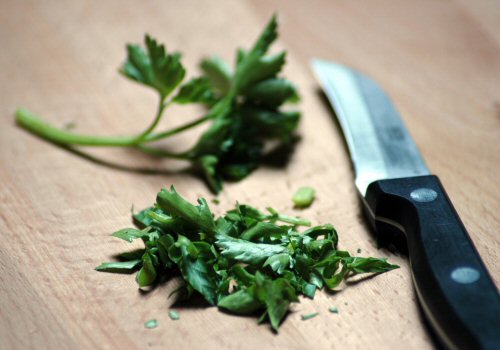
Parsley is one of the most wisely used herbs not just in the UK, but throughout the Mediterranean and the World. A fantastic garnish for all sorts of foods such as soups, stews, curry, salads, dips due to its strong flavour which can bring any bland food alive.
How to grow Parsley
Parsley is a hardy biennial which means that it will grow and can be harvested in its first year, but in it’s second year it will start to flower and set seed, so it is good practice to replace plants in the garden every couple of years as they can exhaust themselves. Parsley should always be grown from seed as cuttings cannot be taken. The seed does require a good period of heat to germinate and a propagator is best if trying to sow early in the year to keep a constant heat. Seeds can take from as little as 10 days, or up to 5 weeks to germinate. As parsley hates it’s roots being disturbed, it is best sown in plug modules or small pots which can be then transplanted on or moved directly into the garden bed.
As parsley is more of a British style of herb, it does require a good rich soil as it is a greedy feeder, and it likes it’s roots to be kept moist especially during hot dry weather. It will die back in winter and come back again the following year, however if you have some planted in pots which have free drainage you will often find that you can keep these plants going throughout all but the worst of British winters.
Harvesting – Parsley does not dry very successfully so is best used freshly cut. Try and cut early in the morning before the sun gets on the plants and ‘softens’ the leaves.Stand stalks in a glass of iced water until needed which will ensure your parsley remains fresh and crisp. I have frozen parsley fairly successfully chopped and placed in ziplock bags but i have tried to open-freeze first to prevent all the parsley sticking together.
Varieties of Parsley
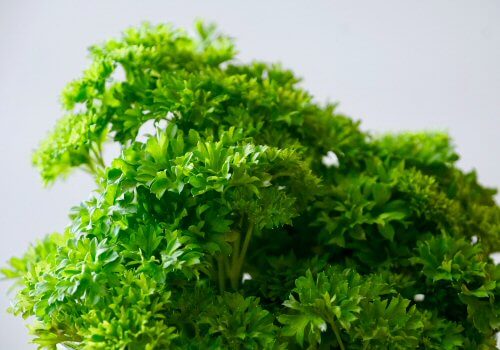
Curly Parsley
Moss Curled Parsley (it’s correct name) is the traditional parsley that many of us remember as being a garnish on plates at the buffet table or used in parsley sauce. Good flavour but not as strong as Flat Leaved Parsley.
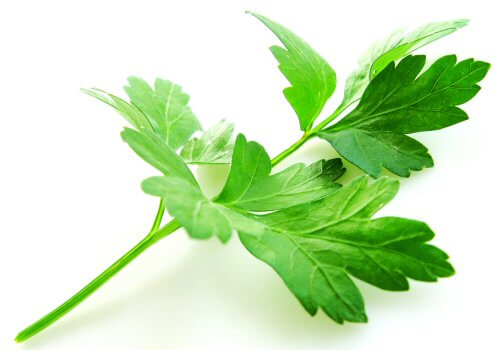
Flat Leaf Parsley
A non frilly flat leaved type (often called French Parsley). This is stronger flavoured than traditional parsley and is favoured by cooks for this reason.
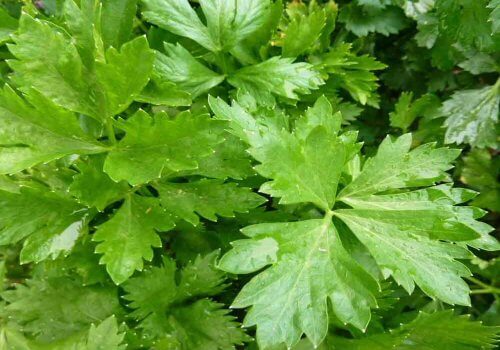
Parcel
Parcel (sometimes called leaf celery) is an alternative to parsley. The plants are almost identical to flat leaved parsley but have a distinctive (although not overpowering) flavour of celery. Great in salads or cooking.
Culinary Uses for Parsley
Parsley is valued for its taste as both a garnish and also as flavouring in cooking. It also has a highly nutritional content being high in vitamin c, iron and other minerals.
As a garnish chop roughly and sprinkle over food. Do not chop just the leaves, the stalks have as much flavour and goodness and should also be used. If using in cooking, always add chopped parsley right at the end of cooking so as to ensure the flavour is still strong.
Take a look at some of our ideas to use parsley for culinary uses below.
Salsa Verde